
 01223 656554 | 01603 881689

Learn the importance of learning and development (L&D) and how transforming your business culture can maximise business profitability.
Organisational leaders are constantly seeking how grow their business and stay ahead of competition. While many focus on upgrading technology or enhancing their offerings, the real competitive advantage lies in improving workforce culture.
The Importance of Positive Culture in Business Growth
A positive culture encompasses the benefits, behaviours and values that dictate how a company’s employees, management and senior management interact. Often described as the core of a business, a positive culture can lead to increased employee engagement, motivation, job satisfaction. These key topics intern increase a business’s ability to grow. This is supported by Deloitte (Diversity Inclusion, 2024) research as it reveals “94% of executives and 88% of employees believe a distinct workplace culture is important to business success”. Forbes (Laker, 2024) study further supports this by stating, “Companies with a strong culture see 4X increase in revenue growth”.
A positive culture isn’t just about having a set of core values displayed on a wall. It is about a deliberate and continuous effort in shaping the skills and behaviour for a team - having positive impact on productivity and profitability.
Learn how BUUK Infrastructure transformed their business by focusing on developing a positive culture through bespoke senior leadership training and team-building exercises. Click Here to Read Case Study
How Learning and Development Creates a Positive Culture
1. Enhancing Leadership Skills
For any business aiming to transform its culture, effective leaders inspire and motivate teams, drive change, and create an environment of growth and innovation. Appollo Technical (Bradshaw, 2024) states “participants undergoing leadership training improve… their performance by 20%”.
Click Here to Read how the Norfolk and Suffolk Mental Health Trust worked with us to implement a leadership development programme where their managers could become more confident, effective communicators and visionary leaders.
2. Promoting Behavioural Change
L&D programmes can align daily habits/practices with desired workplace culture through training such as communication, teamwork, problem-solving, and feedback.
3. Bridging the Skills Gaps
L&D initiatives are instrumental in bridging the skills gaps within organisations, ensuring that workforces are equipped with the latest tools and knowledge to thrive. Continuous learning opportunities also signal to employees that they are valued, which can increase engagement and loyalty. According to Gallup (Chronus, 2024) “organisations with highly engaged workforces outperform their peers by 147%... and have 21% higher profitability”
2024 Workfource Skills Gaps
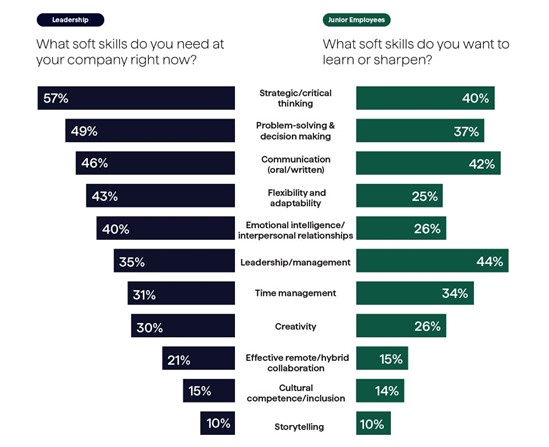
(Contributor, 2024)
The Role of Learning and Development in Driving Business Success
Implementing an effective L&D strategy requires understanding of the specific business needs to design solutions that provide measurable outcomes. Here are some examples of how L&D can drive business success.
- Strategic Alignment
Ensure that all L&D initiatives are closely aligned with business objectives, focusing on areas that will deliver the most impact on performance and growth.
- Measurable Outcomes
Define clear, measurable objectives for each training program. Regular assessments help fine-tune programmes for optimal effectiveness.
- Employee Engagement
Interactive and relevant programs enhance participation rates and the learning experience.
- Continuous improvement
Regularly update L&D programmes to reflect evolving business needs and industry trends.

How to Transform Your Culture and Drive Business Growth
To truly transform a culture and drive business growth, start by elevating the current culture and identify areas where L&D can make the most significant impact.
Follow this guide and see what you can do differently:
1. Conduct a Skills Audit
Identify the skills and knowledge currently existing and what is needed in the future. This will allow for designed targeted L&D solutions tailored to specific business needs.
2. Set Clear Objectives
Define what success looks like, this clarity will guide strategies and help measure progress.
3. Engage Leaders
Encourage leaders to actively participate in and endorse L&D efforts. Their involvement can set a powerful example for the rest of the business.
4. Create a Positive L&D Culture
Promote an environment where continuous learning is valued and supported. This can include providing time for training, recognising learning achievements, and integrating L&D into career development paths. This is particularly important as Totaljobs (Warnham, 2022) mentions “2 out of 3 UK workers have changed jobs due to a lack of learning and development opportunities”
5. Utilise Modern Learning Methods
Utilise modern L&D learning methods to make learning accessible and engaging. For example – online or face to face learning, workshops, e-learning, webinars, seminars and many more.
How does your current workplace culture support or hinder business growth?
What specific skills gaps exist within your team, and how can L&D initiatives address them?
Conclusion
Transforming workplace culture through targeted L&D strategies drives business growth. By enhancing leadership skills, promoting behavioural change, and bridging skills gaps, businesses can build a dynamic workforce ready to tackle future challenges. Embrace these strategies to remain competitive and create a thriving workforce where both business and employees grow and succeed together.
Ready to Grow your Business and Transform Your Culture?
At Turning Factor, we specialise in bespoke training solutions to address your organisation's unique needs and challenges. Our expert team is dedicated to helping you develop a culture of continuous learning and growth.
Are ready to elevate your culture and drive business success?
Contact us today and discover how our tailored L&D strategies can propel your organisation towards its goals.